By Omphile Maebane
The Madlanga Commission succeeded in compelling one of its most anticipated witnesses to testify. But when it came to the Medicare24 tender at the centre of its inquiry, Vusimuzi “Cat” Matlala quickly demonstrated that getting a witness into the chair and getting answers from him are two different things.
The commission spent weeks trying to secure Matlala’s evidence. On Monday, it succeeded, only to encounter the limits of what that testimony could reveal.

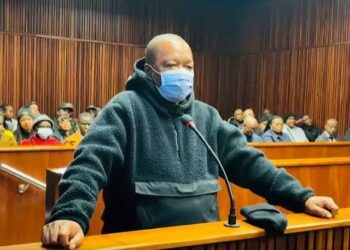
Matlala, the alleged crime boss at the centre of a controversial multimillion-rand police healthcare contract, was sworn in on Day 160 of the inquiry into criminality, political interference and corruption in South Africa’s criminal justice system.
Within minutes, he drew a line around one of the issues the commission most wants him to address.
When questioned about the Medicare24 tender, Matlala invoked his right against self-incrimination, saying he would not provide evidence that could prejudice him in his pending criminal proceedings.
The development was not entirely unexpected.
Matlala last appeared before the commission on 15 July, when his legal team sought a postponement amid concerns that his testimony could affect his criminal proceedings.
His lawyer, Advocate Van den Heever, argued that the criminal cases against Matlala limited what he could safely answer before the commission.
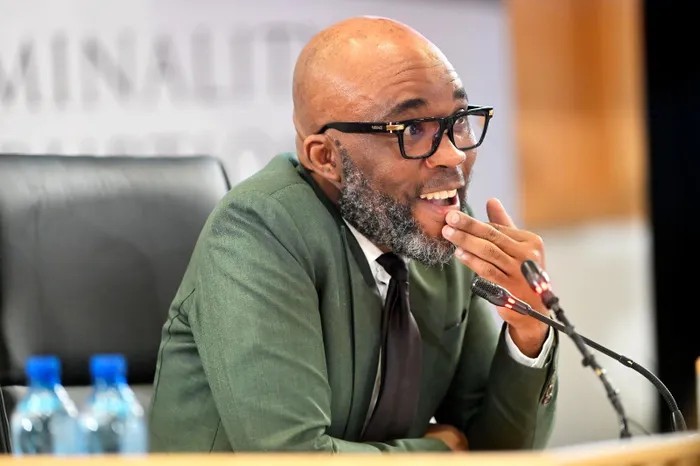
Justice Mbuyiseli Madlanga questioned why the commission should have to wait for the criminal process when Matlala already knew the facts on which he was expected to testify.
His evidence was nevertheless postponed to 1 September. The appearance was later brought forward to 17 and 18 August, with Matlala appearing under subpoena.
The commission therefore succeeded in getting him into the witness chair. Whether that translates into answers on some of the inquiry’s central questions remains uncertain.
Matlala has been willing to speak where the apparent legal risk is lower.
He confirmed a previous conviction for housebreaking and theft, outlined the criminal matters currently pending against him and identified people charged alongside him.
He also denied wrongdoing involving his security company and the City of Ekurhuleni, saying Cat VIP Protection had provided security services to former mayor Tania Campbell “for no financial gain”.
But when questioning turned to the Medicare24 contract, Matlala invoked his right against self-incrimination.
That is significant because much of the evidence already heard by the commission concerns Matlala’s relationships with serving and former police officials.
Major-General Richard Shibiri acknowledged receiving money from Matlala, which he maintained was a loan that he later repaid. The commission subjected that explanation to extensive scrutiny.
Former SAPS Brigadier Rachel Matjeng told the commission that she received gifts from Matlala during an intermittent romantic relationship with him. She denied that the benefits were connected to the police tender and said she had not served on the bid specification, evaluation or adjudication committees.
Matjeng was later dismissed from SAPS after an internal disciplinary process found her guilty of several counts of serious misconduct arising from her relationship with Matlala.
Those relationships form part of the wider web the commission is attempting to unravel.
Matlala is among those best positioned to give his version of how those relationships worked, what was exchanged and what, if anything, was expected in return.
But his appearance has exposed a difficult legal reality for the inquiry.
The commission can compel him to appear. It can put allegations and evidence to him and test his responses. What it cannot simply remove is the criminal jeopardy created by his pending cases.
That distinction became clear almost immediately on Monday.
Matlala was physically in the witness chair, under oath and answering questions. Yet on one of the subjects for which his testimony is most eagerly awaited, his pending prosecution gave him a legal reason to say as little as possible.
His evidence is continuing, with a second day of testimony scheduled for Tuesday.
The question facing the commission is therefore no longer whether it can get Cat Matlala onto the stand.
It is how much it can get from him once he is there.