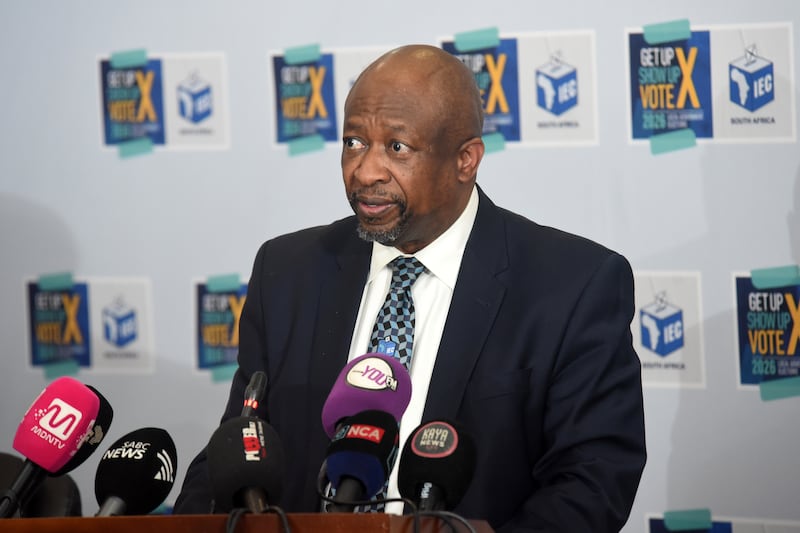
The Electoral Commission of South Africa (IEC) reported significant progress across the country during the Local Government Elections, despite a few isolated incidents. According to the Commission’s preliminary estimates, approximately 12 million voters had cast their ballots by 5pm on Wednesday, 4 November 2026.
IEC Chief Electoral Officer Sy Mamabolo said Gauteng recorded the highest number of voters, with approximately three million. KwaZulu-Natal followed with 2.5 million, the Western Cape with 1.5 million, the Eastern Cape with 1.4 million, Limpopo with 1.1 million, Mpumalanga with 854 000, North West with 702 000, the Free State with 588 000 and the Northern Cape with 299 000.
During an Election Day media briefing, Mamabolo said voting had progressed well across the country, despite a few isolated incidents.

According to the Commission, the counting of ballots began shortly after voting closed. Ballot papers were counted at the voting stations where they were cast, in the presence of political party agents, independent candidate agents and accredited observers.
Mamabolo explained that ballot papers were checked for the IEC’s security stamp before being sorted and counted separately for each electoral contest. These included the proportional representation (PR) ballot and, where applicable, the district council PR ballot.
Following the counts, results for each contest were reconciled against the ballot papers received, issued, unused, spoilt and counted at the voting station.
Results slips were captured in duplicate, signed by the presiding officer and countersigned by party agents before being displayed at the voting station once counting and tallying were completed.
“The Results Operations Centres provide political parties, independent candidates, observers and the media with an opportunity to monitor the capturing, verification and processing of results, reinforcing the transparency and integrity of the process,” Mamabolo explained.