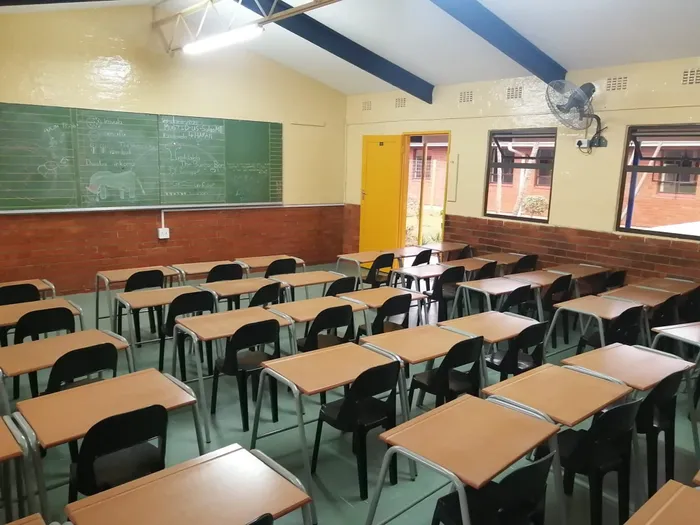
EASTERN CAPE: The Eastern Cape’s plan to close 123 schools in the coming financial year has renewed concerns about the impact of declining learner numbers on rural communities.
The provincial Department of Education says a further 300 schools could be affected by rationalisation in the years ahead, as declining enrolment makes it increasingly difficult to justify maintaining some schools in their current form.
The department says the process is intended to consolidate under-enrolled schools, improve the distribution of teachers and resources, and ensure that public funds are directed towards schools that can provide sustainable education.

However, for communities where a school is more than just a place of learning, closures could have consequences that extend beyond the classroom.
For some rural learners, the closure of a nearby school could mean longer journeys to school, greater reliance on scholar transport and leaving home earlier to reach a larger school.
According to Inside Education, Eastern Cape education spokesperson Malibongwe Mtima said the department was aware of the potential impact of school closures on rural communities.
“The rural areas will be impacted. The department has looked into the rationalisation with other officials, including those from the Department of Transport and the Department of Education. These will ensure that schools are merged and transport is provided accordingly,” said Mtima.
The department’s position is largely based on learner numbers and the resources allocated to schools.
Mtima said schools with declining enrolment receive fewer resources because funding and staffing are linked to the number of learners enrolled.
“The unviable schools are schools that have got lesser numbers, leading to fewer resources. We resource based on learner numbers. Once learner numbers are dwindling, we will not have enough educators, and there’s not going to be enough resources,” he said.
According to the province’s 2024/25 education budget documentation, 112 schools had been closed after being identified as falling below the permissible enrolment norm, while another 109 schools had been aligned under the rationalisation programme.
The decline in learner numbers is also linked to changing population patterns in the province. Previous reporting has highlighted the movement of families and learners from rural areas towards urban centres such as Buffalo City and Nelson Mandela Bay, leaving some rural schools with increasingly small enrolments.
When closing a school changes a community
For parents in affected communities, however, the issue is not simply whether a school has enough learners to remain open.
A local school can determine how far a child travels each day, how much time a family spends getting them to school and whether parents can realistically monitor their education.
These concerns are particularly significant in rural areas, where roads and public transport can already be unreliable.
The Democratic Alliance (DA) in the Eastern Cape warned in 2025 that school rationalisation should not take place without first establishing whether affected learners would have access to safe transport or suitable alternative schools.
The party also raised concerns about the availability of scholar transport in the province.
The history of school closures in the Eastern Cape suggests that the debate is unlikely to end with the 123 schools identified for the coming financial year.
With hundreds more schools potentially affected in the years ahead, the province faces a difficult task: making its education system financially and administratively sustainable without placing an additional burden on learners living in rural communities.
For the department, rationalisation means ensuring limited resources go where they are most needed.
For families, the question is more immediate: whether their children can still get to school safely and consistently, without the closure of a local school turning education into a longer and more difficult journey.